
Points ↔ Millimetres
One point is one thousandth of an inch. 1,000 pt = 1 inch = 25.4 mm.
The Holder Ladder
Standard sizes, what they measure, and what actually goes in them.
| Size | Opening | Typical contents |
|---|---|---|
| 35pt | 0.889 mm | Standard paper base cards, all TCG |
| 55pt | 1.397 mm | Chrome, Prizm, Optic, Select — chromium stock |
| 75pt | 1.905 mm | Thin relics, thicker inserts |
| 100pt | 2.540 mm | Single-colour jersey swatches |
| 130pt | 3.302 mm | Multi-colour patches, RPAs, National Treasures, Flawless |
| 180pt | 4.572 mm | Jumbo patches, logoman |
| 260pt | 6.604 mm | Very thick memorabilia |
| 360pt | 9.144 mm | Booklets and the thickest cards made |
The Mistake Everyone Makes
A 35pt holder is not for a 35pt card. The rating describes the holder’s inner opening, not the card. A standard modern base card is closer to 20pt; the extra fifteen points leave room for a penny sleeve and a little air.
Your card must always be thinner than the rating. Force a Chrome or Optic card into 35pt and you will round the corners on insertion, which is exactly the damage graders punish hardest. And remember the sleeve: a penny sleeve adds about four points.
One more trap. Thick holders do not fit standard storage boxes, and nine-pocket binder pages stop working properly beyond roughly 35pt. Sizing up protects the card and creates a storage problem at the same time.
The StepCard
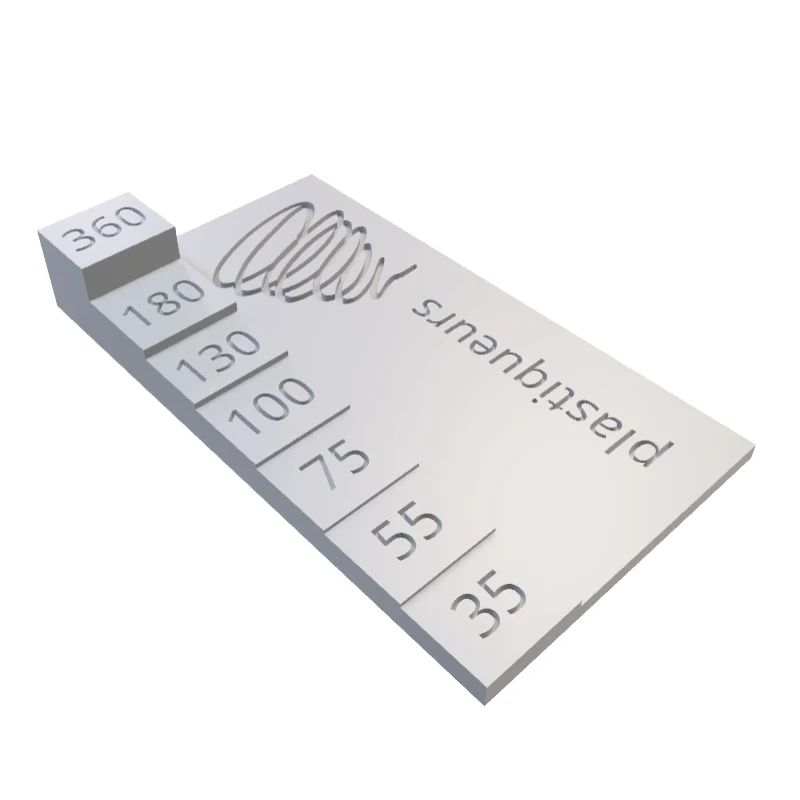
A 3D-printed step gauge, designed and made by JEX.
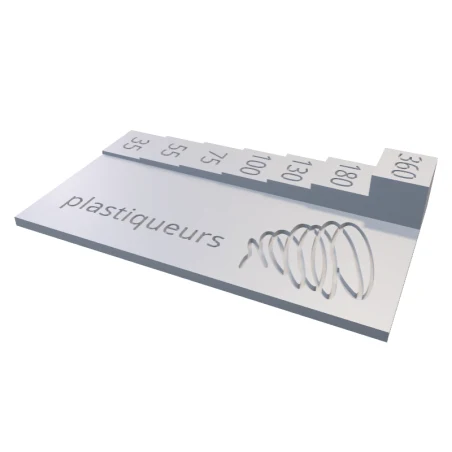
Every step on the gauge is machined to one holder size — 35, 55, 75, 100, 130, 180 and 360. Slide a card along until it stops, read the number, buy that holder. No calipers, no stacking ten cards and dividing, no arithmetic.
It solves the problem the whole page above describes: knowing the thickness before you order supplies, rather than discovering it when the card will not go in.
Made to order, in the colour of your choice, with the text of your choice.
Want one?
Message me on Instagram. Colour and text are customisable — your name, your Instagram handle, your shop, whatever you like.
@jex.tradingcardsThickness FAQ
The questions that come up in every supplies aisle.
What does PT mean on a toploader?
Is a 35pt toploader for a 35pt card?
What size holder does a Chrome, Prizm or Optic card need?
What size holder does a patch or relic card need?
How do I measure a card without calipers?
Does a penny sleeve change the size I need?
Will thick cards fit in a nine-pocket binder page?
Sources
Point definition and the standard holder ladder checked against Ultra PRO and BCW Supplies gauge sheets, and card-type guidance against CardShellz, EVORETRO and BCW. Verified July 2026.
Card thickness varies between manufacturers and between products in the same year. Every figure here is a starting point, not a specification. Measure the card in front of you.